
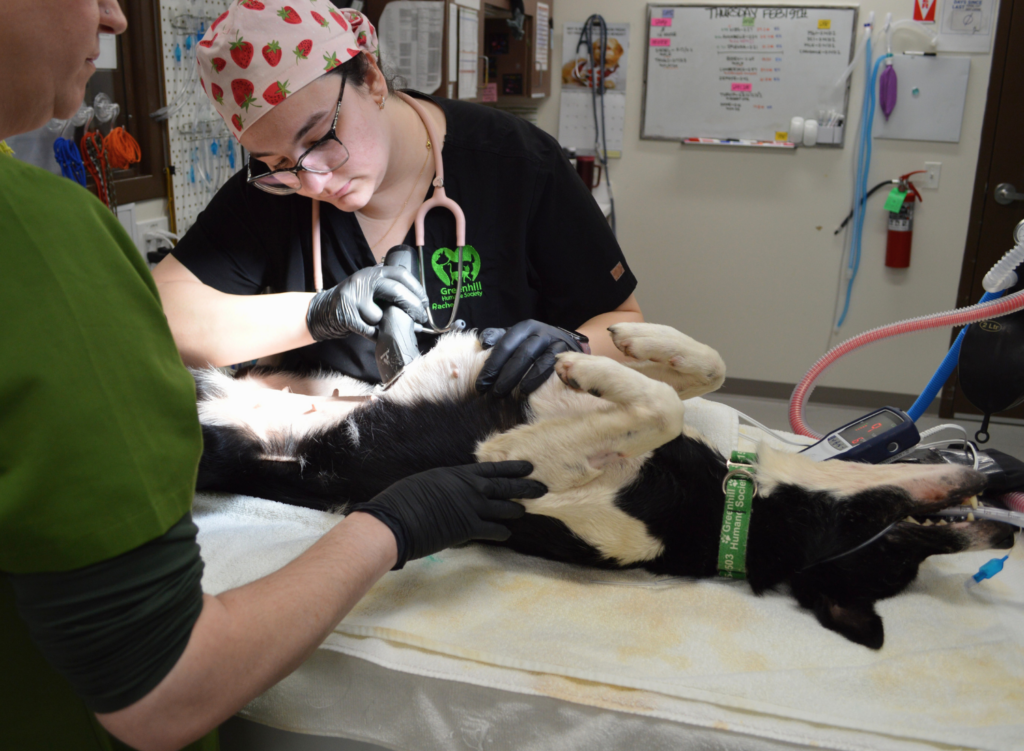
February is Spay/Neuter Awareness Month and Tuesday, February 24 is World Spay Day, an annual campaign that encourages people to save lives by spaying and neutering companion animals and community cats. Greenhill Humane Society works year-round to promote the importance of spaying and neutering, spays or neuters all dogs, cats, and rabbits prior to adoption, and offers spay/neuter services for freeroaming community cats. Last year, Greenhill’s surgical team performed over 3,600 spay/neuter surgeries, of which 1,290 were surgeries performed on community cats through their TrapNeuter-Return Program.
Spay/neuter remains one of the most beneficial and economical preventative healthcare measures community members can choose to protect the health, welfare and safety of their companion animals, while helping reduce overpopulation and crowding in shelters and rescues.
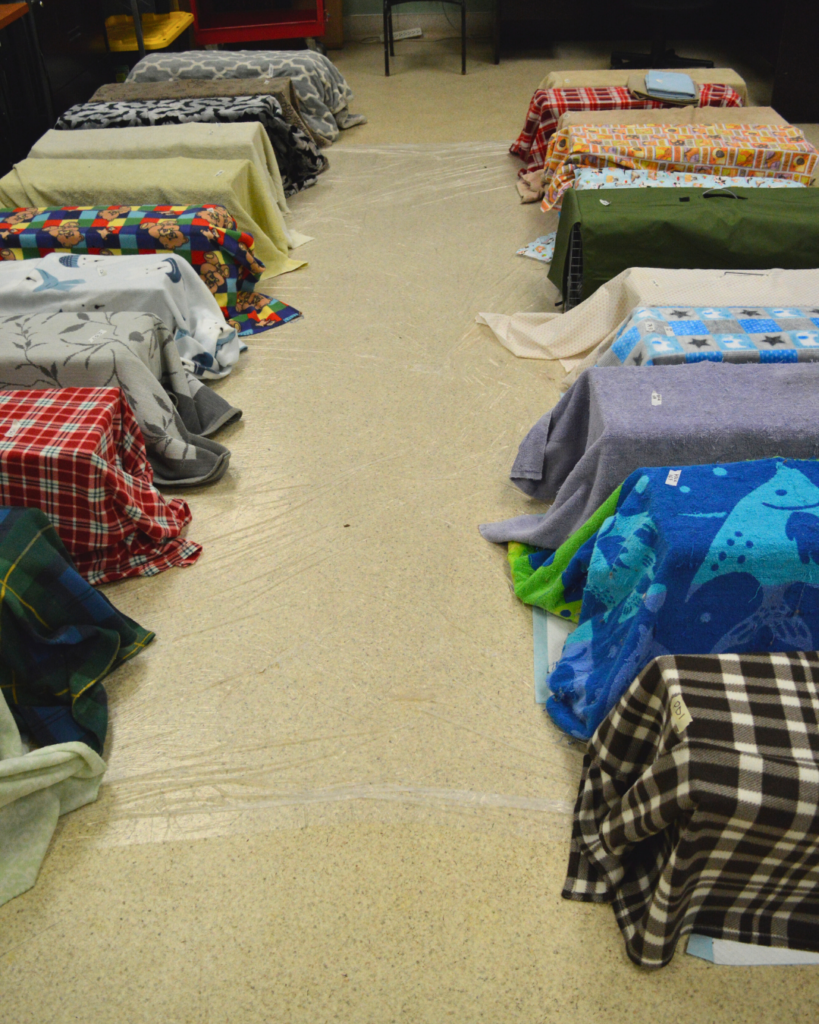
TNR cats recovering after surgery
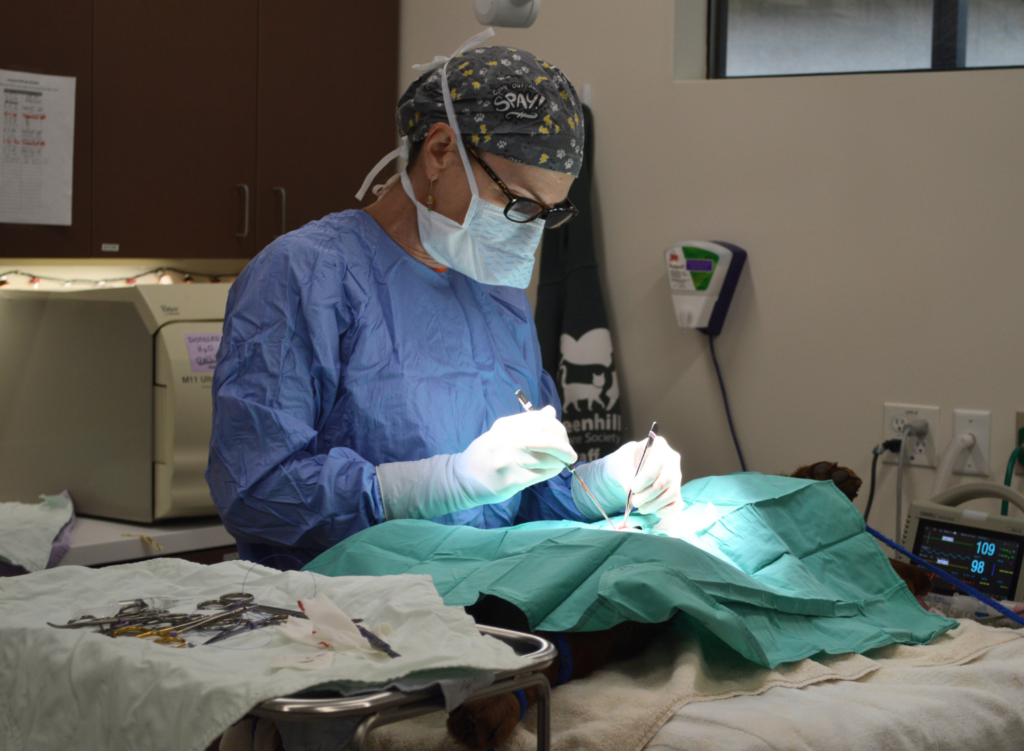
“Owners of companion animals are encouraged to have thoughtful, comprehensive conversations with their veterinarians regarding reproductive healthcare decisions for their animals,” says Greenhill’s Director of Surgery, Dr. Rachel Powell.
Factors to consider include:
1. Potential health benefits: In addition to reducing unwanted or unplanned animal pregnancies, spaying or neutering an animal improves the overall behavior and health of animals. Spaying prevents female cats from night-time pacing and loud vocalizations while in heat. Spaying female dogs before their first heat cycle prevents uterine infections, uterine cancer, and breast cancer. Neutering males prevents spraying, humping, aggression, and the urge to roam. It also prevents testicular cancer and prostate gland disease and infections.
2. Owner lifestyle and preferences: Intact pets are more challenging to confine and manage in most homes. Both intact males and females are more likely to escape from homes and yards in search of mates. Intact males may be more difficult to housetrain and prevent from urine marking. When females are in heat they may experience incontinence in their home. Intact males are more likely to display dominance and aggressive behavior towards other animals. Undesirable behaviors that develop in an animal’s first years of life may not be resolved even if they are later neutered. Landlords, dog parks, boarding/daycare facilities and other public spaces may not accept intact pets.
3. Financial cost of delaying the surgery: Owners considering delaying the surgery until adulthood should enquire with their veterinarian about the cost of the surgery at different ages and weights. The cost for mature pets, especially large breed dogs, can be 2 or 3 times more than the cost for juvenile pets. Owners of intact females must be prepared for potential emergency care required if female pets develop a life-threatening uterine infection, called pyometra. This condition occurs in 20% of female dogs and frequently requires emergency surgery, which can cost thousands of dollars. Additionally, owners of intact companion animals should be prepared for the costs related to traumatic injuries, such as being hit by cars or fighting, due to breeding/roaming behavior.
4. Unplanned litters: Despite the best intentions, accidental or unplanned pregnancies commonly occur when companion animals of sexual maturity (as young as 4 months) remain intact. Unplanned or unwanted litters are commonly abandoned or surrendered to shelters by owners unprepared for the tremendous cost and time commitment required.